

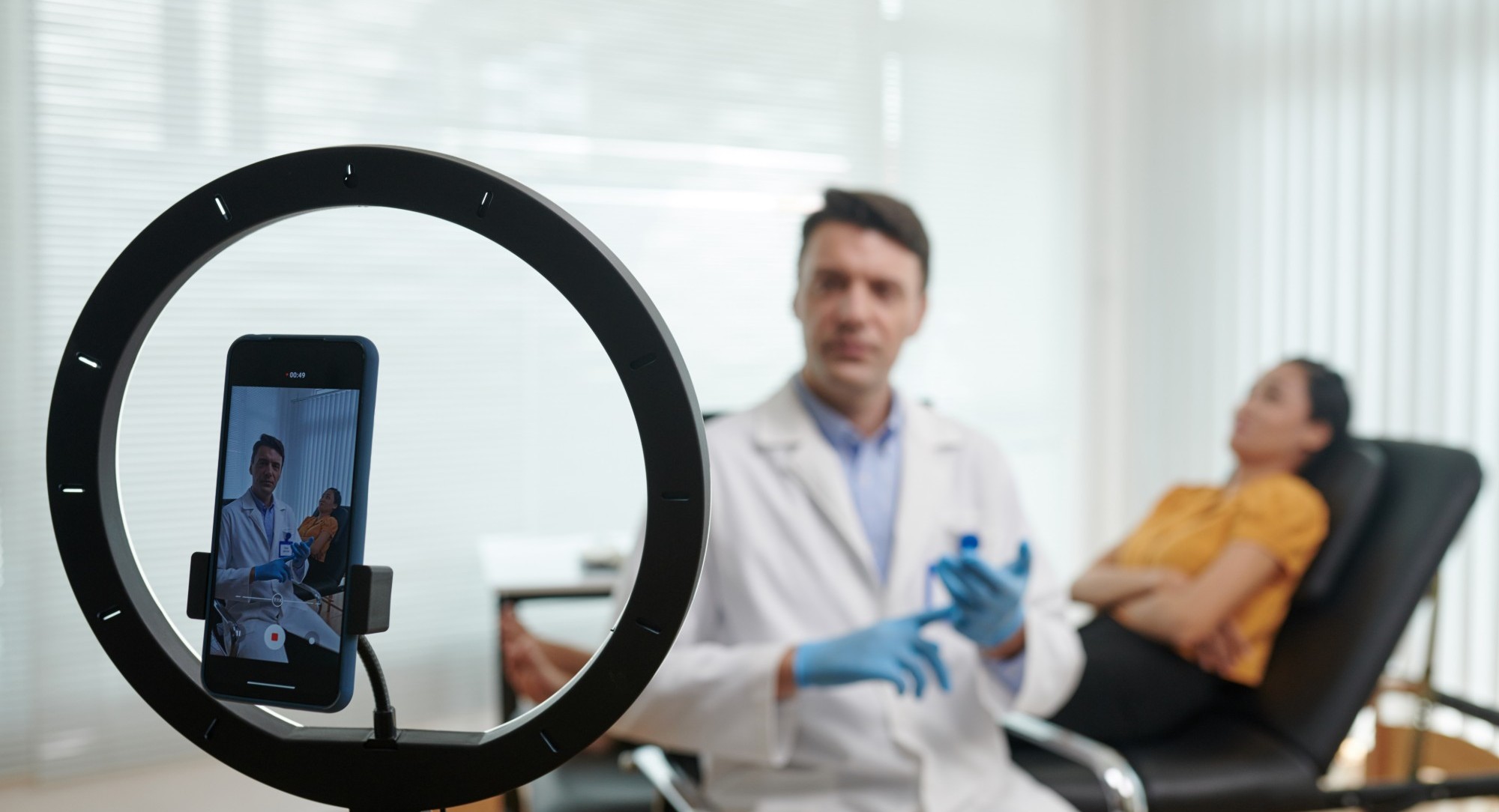
A practical guide to building reach without trading away patient trust, professional judgment, or your authentic voice.
When I started creating dermatology content, I thought the hard part would be translating complex medicine into a short video. It is not. The hard part is being useful, credible, human, and entertaining at the same time – without allowing the platform to push you past your professional boundaries.
Social media has helped me educate people far beyond the exam room, grow a practice, challenge skin-care misinformation, and connect with patients who might never otherwise hear from a board-certified dermatologist. But visibility magnifies everything. A casual reply can sound like a diagnosis. A dramatic hook can become an overclaim. A ten-second background detail can expose protected information.
My rule is simple: the more reach a post may have, the more discipline it deserves. Here are the mistakes I would urge residents and early-career dermatologists to avoid.
1. Do not let the content calendar outrank patient privacy
A signed release is not a shortcut around judgment. Patient privacy begins before you press record and continues after a patient has agreed to appear. Consent should be specific to the intended use, voluntary, documented, and easy to understand. A patient should never feel that saying yes to content is part of receiving good care.
- Audit the entire frame. Look for names on screens, labels, schedules, reflections, voices, distinctive tattoos, dates, and other patients or staff in the background.
- Be cautious with ‘anonymous’ stories. A combination of age, location, occupation, timing, and diagnosis may identify someone even when no name or image appears.
- Use the dignity test. Ask whether the patient would still feel respected if the clip escaped its original context and appeared on a different platform years later.
2. Do not diagnose in the comments – even when the answer feels obvious
A follower sends a photo and asks, ‘What is this?’ The impulse to help is real, but a social-media thread is not a clinical encounter. You do not have the full history, a proper examination, documentation, or the ability to arrange follow-up.
- Teach the framework, not the verdict. Explain what dermatologists generally consider, which warning signs matter, and when an in-person evaluation is appropriate.
- Use a consistent redirect. For example: ‘I cannot diagnose or treat an individual condition on social media. Please see a board-certified dermatologist, and seek urgent care if you have concerning or rapidly worsening symptoms.’
- Move existing patients to approved channels. If someone raises a treatment question publicly, direct them to the practice portal or office rather than continuing in DMs.
3. Do not confuse a viral hook with a medical claim
Platforms reward certainty, surprise, and speed. Medicine often requires nuance. That tension is where physician creators can lose credibility. ‘This ingredient is useless’ may perform better than ‘the evidence depends on the indication, formulation, and patient,’ but the second statement is closer to how we actually practice.
- Hook attention without distorting the conclusion. A strong opening is fine; the payoff still has to be accurate.
- Do not promise outcomes. Avoid guarantees, universal timelines, and before-and-after framing that implies everyone should expect the featured result.
- Say what is uncertain. If evidence is limited, emerging, off-label, or based mainly on personal experience, make that clear.
4. Do not post clinical skin content without thinking like both a physician and a platform moderator
Dermatology naturally involves exposed skin, sensitive body sites, procedures, and before-and-after images. Clinical intent does not guarantee that a platform will interpret the content as clinical, and a patient’s consent does not eliminate the need for restraint.
- Frame tightly and clinically. Show only what is necessary to teach the point, especially for intimate areas or procedures that could be misread outside context.
- Check current platform rules before publishing. Policies and enforcement change. Build a version that can survive cropping, reposting, and automated moderation.
- Apply an even higher threshold for minors. Consider whether the educational value truly requires identifiable content and involve your compliance or legal team when appropriate.
5. Do not borrow authority from credentials you do not have
Social media collapses specialties into one feed, but our expertise is not interchangeable. I am comfortable speaking clearly about medical, surgical, and cosmetic dermatology. When content moves outside my training, I would rather collaborate with the right colleague than perform certainty for the algorithm.
- Represent credentials precisely. Use titles such as ‘board-certified dermatologist’ only when they accurately describe your certification and role.
- Separate opinion from consensus. Do not imply that your preferred technique, device, supplement, or product is the profession’s settled view.
- Correct yourself visibly. If a post is materially wrong or outdated, update or remove it and explain the correction when the original claim had meaningful reach.
6. Do not hide the business relationship
Physician influence is valuable precisely because audiences assign weight to our credentials. That makes transparency non-negotiable. Payment, free product, travel, affiliate revenue, advisory work, ownership, and other material connections should be disclosed in a way an ordinary viewer will actually notice.
- Put the disclosure where the endorsement appears. Use clear language such as ‘Ad,’ ‘Sponsored,’ or a plain-English explanation near the beginning – not after ‘more’ or buried in hashtags.
- Disclose inside video content. For video or Stories, make the relationship clear in the content itself; visual and spoken disclosure is often the safest approach.
- Only endorse what you can defend. A contract does not change the evidence. If I would not comfortably recommend something in the exam room, I should not recommend it because a camera is on.
7. Do not outsource your medical judgment to a brand – or your posting judgment to a team
A manager, agency, or staff member can improve production, but your name and license remain attached to the final message. Establish a review process for clinical claims, patient content, sponsorship language, comments, and crisis response.
- Create a written social-media policy. Define who may film, approve, post, respond, access accounts, and retain consent and campaign records.
- Review contracts beyond the fee. Pay attention to usage rights, exclusivity, editing control, whitelisting, claim language, and how long a brand may use your image.
- Confirm coverage and local requirements. Ask your malpractice carrier and counsel how social-media activity, advertising rules, and state-board guidance apply to your practice.
8. Do not build a persona you cannot sustain
Audiences can sense when a physician is imitating whatever is trending. My most effective content tends to come from questions I hear repeatedly in clinic, myths I genuinely want to correct, or products and procedures I have a real reason to discuss. That is easier to sustain than performing a character every day.
- Show personality with purpose. A glimpse of family, fitness, travel, fashion, or life at the practice can make education more relatable. It should support the relationship, not overwhelm the reason people followed.
- Choose boundaries before you need them. Decide what parts of your home, family, relationships, politics, and personal life will remain off-camera.
- Assume the screenshot outlives the context. Privacy settings, disappearing Stories, and deletion reduce visibility; they do not erase what has already been captured.
9. Do not post when your judgment is temporarily impaired
Some of the most damaging posts are not strategic mistakes; they are emotional ones. Do not publish while angry at a patient, another clinician, an employer, a brand, or a commenter. Do not turn a difficult clinical day into vague content that a patient could recognize.
- Use a pause rule. For controversial, defensive, or highly personal content, save the draft and review it the next day.
- Never crowdsource a patient dispute. Even when you omit a name, the post can breach trust and invite an audience into a relationship that requires confidentiality.
- Respond proportionally. Not every inaccurate comment needs a rebuttal. Correct information calmly, move appropriate issues offline, and know when silence protects the mission.
My pre-post check
| Check | Question I ask before publishing |
|---|---|
| Privacy | Could any patient or private information be identified directly or indirectly? |
| Accuracy | Is the claim evidence-based, appropriately qualified, and within my expertise? |
| Boundary | Am I educating generally rather than diagnosing or treating an individual? |
| Transparency | Would a viewer immediately understand every relevant financial relationship? |
| Context | Would the post still feel professional if clipped, reposted, or shown without its caption? |
| Purpose | Does this help the audience, or am I posting mainly because the algorithm wants more? |
The bottom line
The goal is not to become so cautious that you become invisible. Dermatology needs credible voices online. The goal is to earn attention without letting attention change your standards. Be clear enough to teach, human enough to connect, and disciplined enough that your patients would recognize the same physician online that they trust in the exam room.
Practical note: This article offers general professional guidance, not legal advice. Platform policies, advertising requirements, and state medical-board rules can change; confirm the requirements that apply to your practice.
Selected guidance: FTC Endorsement Guides and influencer disclosures; AMA guidance on physicians’ use of social media.