Monoethanolamine (MEA) functions as a pH stabilizer, emulsification agent and surfactant. All cosmetic uses of MEA are in rinse-off hair products. MEA has a highly alkaline pH that is helpful to maintain the stability and efficacy of oxidative hair coloring products.
MEA also functions as an emulsifier to blend water and oil components. Salts of MEA are used as surfactants to aid in cleansing and/or shampooing.
MEA is more commonly used outside of dermatology as a rust inhibitor in water-based metal working fluids. In this industry, MEA is beneficial due to its emulsifying properties and ability to protect against corrosion.
Pyrithione zinc is a versatile and clinically proven ingredient that offers relief for a variety of skin and scalp conditions. Its antifungal, antibacterial, and anti-inflammatory properties make it a go-to solution for managing conditions related to microbial imbalance and inflammation.
Seborrheic dermatitis (also known as “cradle cap” in infants, and “dandruff” in common parlance) are conditions closely linked to the overgrowth of Malassezia yeast, which thrives in areas with active sebaceous glands. In certain conditions such as dry weather, or when someone experiences physiological or mental stress, symptoms of itching, scaling, and redness may occur. Pyrithione zinc-containing shampoos and creams effectively alleviate symptoms by reducing the Malassezia population and calming inflammation.
Pityrosporum folliculitis (often called “fungal acne” in common parlance) also caused by Malassezia yeast, presents as itchy, acne-like bumps on the chest, back, shoulders, and sometimes the face. These lesions occur due to the yeast infecting hair follicles, leading to inflammation and pustule formation.
Pyrithione zinc has shown effectiveness in managing Pityrosporum folliculitis due to its ability to reduce Malassezia colonization and inflammation. Regular use of pyrithione zinc-containing cleansers or shampoos applied to affected areas can significantly improve symptoms, often within weeks.
Yes, topical use of pyrithione zinc is safe for use in patients of all skin tones. Although rare, contact dermatitis reactions to pyrithione zinc have been reported, and patients with hypersensitivity should avoid using this product. Topical use of pyrithione zinc is generally considered safe in pregnancy and breastfeeding.
Oral ingestion of pyrithione zinc may lead to nausea and vomiting, and therefore its use should be limited to the skin. Avoid using pyrithione zinc on open wounds or severely damaged skin to prevent irritation. In rare cases, hypersensitivity reactions such as redness or burning may occur, requiring discontinuation of use.
Gupta AK, Richardson M. “Seborrheic dermatitis and Malassezia species: How strong is the connection?” J Investig Dermatol Symp Proc. 2021;22(1):28-35.
Dessinioti C, Katsambas AD. “Seborrheic dermatitis: Etiology, risk factors, and treatments: Facts and controversies.” Clin Dermatol. 2023 Jan-Feb;41(1):7-15.
Kastarinen H, Oksanen T, Okokon EO, et al. “Topical treatments for seborrheic dermatitis: A systematic review and meta-analysis.” J Am Acad Dermatol. 2020 May;82(5):1136-1147.
Park H, Oh IY, Lee YH, et al. “Efficacy of zinc pyrithione-containing shampoo on Pityrosporum folliculitis.” Int J Dermatol. 2022;61(2):207-213.
Draelos ZD. “The science behind the treatment of dandruff and seborrheic dermatitis with shampoos.” J Clin Aesthet Dermatol. 2019 Nov;12(11):39-44.
Domingues E, Haneke E. “Pityrosporum folliculitis: A review.” Clin Cosmet Investig Dermatol. 2021;14:559-566.
Nielsen NH, Menné T. Allergic contact dermatitis caused by zinc pyrithione associated with pustular psoriasis. Am J Contact Dermat. 1997 Sep;8(3):170-1. PMID: 9249288.
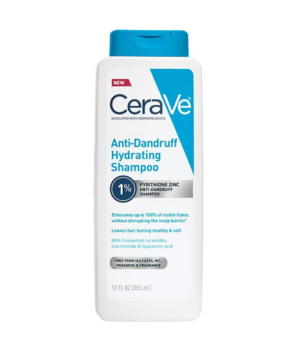
Cera Ve Anti-Dandruff Hydrating Shampoo
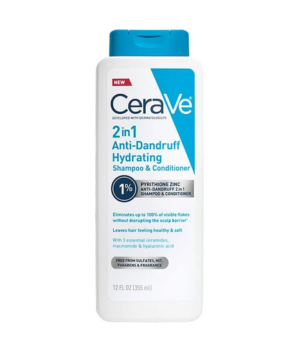
Cera Ve 2-in-1 Anti-Dandruff Hydrating Shampoo and Conditioner